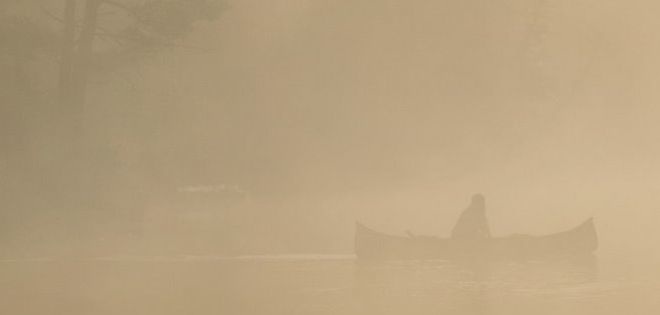
At one time in my life (and for a good many years in duration), the writings of Thomas Merton were a significant influence on me. Although Merton's writings no longer hold influence in my life, in looking back, I have to say he was one of my most significant influences.... I first found Merton as a teenager. It was through Merton that I was first introduced to monasticism (both East and West) which at one point became quite influential in my life. It was through Merton also that I was introduced for the very first time to Buddhism, specifically Zen. Merton remained a faithful Catholic all his days, but in his later years, his leanings toward, and the fruits of his conversations with, Buddhism, were readily evident in his writings.
 Then last night I visited the Merton blog louie, louie, and was reminded of a Merton documentary that I own and had not viewed in a couple of years. So I pulled it out and watched it. It is interesting to me that Beth at the louie, louie blog, chose my very favorite scene from the film to share in her post. I'll post it here with more comments below.
The "line" that haunts me from this section of the film each time I see it is "The solitude confirms my call to solitude. The more I'm in it, the more I love it. One day it will possess me entirely, and no man will ever see me again." I'll let that one stand without further commentary except to say that it stirs something deep in me that I cannot even adequately articulate.
That snippet notwithstanding, it felt odd to revisit this man last evening. Like seeing someone who was once a close friend, but with whom you've grown apart over the years and now realize you have not much in common anymore.
And there is a bit of sadness in that. To me, anyway. But that is life. If a journey continues, there will inevitably be that which is left behind....


"Merton's writings no longer hold influence in my life,,," Really? I guess it all depends on how you define influence, doesn't it? fondly :-)
ReplyDeleteI think that each of us can relate to leaving someone or something behind. As you aptly point out, it's part of the journey we call life.
ReplyDeleteDifferent individuals tread different paths at different speeds at different times. Consequently, if one leads a dynamic life, it is necessary to shed things or people from time to time. If you don't, then you're not truly walking a path; you may be moving your legs, but you're not going anyplace. (Of course, I speak of the rhetorical you, not you personally.) ;-)
There was piece on Merton recently on PBS which I watched and enjoyed.
ReplyDeleteSome years ago, I picked up three or four volumes of Merton's journals, which I dip into from time to time. (I wish I had the full set, but haven't so far managed to accumulate them.) Anyway, I like some of the things Merton says about nature, especially later in his life. I find his earliest journals to be a bit too full of his own importance in regards to art and life. He needed, I think, the years in the Kentucky countryside…and the silence…to find his own relevance, his own voice, his own place.
Isn't it odd that we all need to turn inward before we can grow and learn. The road ahead is easier to see after we've looked honestly at ourselves.
Lucy,
ReplyDeleteI admit that I am not comepletely sure what you mean by your comment. Although some things still resonate (such as the quotation from Merton's journal in the video that I posted), much of Merton seems foreign to me now, as does almost all "Christian" stuff. As I am no longer a Christian and as Merton's thought is rooted in a Christian view and in an actual belief in its truth (something I no longer have).... The influence that once was is no more, and I mostly find myself saddened to read Merton. And it's not just Merton....
I suppose that is what I was trying to convey although I did not explicitly say that. And now I have explicitly said it in this comment. Hmmm, how did that happen?
Fondly back to you.
Peace
PS Lucy, I'm glad you still stop by. Thank you.
ReplyDeleteRT,I think you have put it very well. I think you're right.
ReplyDeleteTo me though, even though the "partings" are an inevitable part of life...they still hold a touch of sadness for me.
Perhaps that's just me.
I do not want to just move my legs; I want to go someplace. And I believe I am.
Peace to you, my Taoist friend; thanks for reading and commenting.
Grizzled,
ReplyDeleteI also like Merton's thoughts on nature. And I certainly agree that through the years at Gethsemani he found his unique and relevant voice. I find that many people never get much past the epic "Seven Story Mountain" (his first book and an autobiography, how about that?!) I do find that book somewhat full of self-importance though. For me, the more "authentic" Merton is the later Merton....
You write:
Isn't it odd that we all need to turn inward before we can grow and learn. The road ahead is easier to see after we've looked honestly at ourselves.
Well said and I think I completely agree with you.
Always pleased to read your insights here. Peace
"If a journey continues, there will inevitably be that which is left behind...."
ReplyDeleteSo true.
Thank you Val.
ReplyDeleteFW, it's not just you! All of us become overly attached to people and things. We put so much of ourselves into our possessions and relationships that each time we must bid one farewell, we are concurrently saying goodbye to a part of ourselves.
ReplyDeleteI often wonder if a tree cries when it loses its leaves or needles.
The thing about Merton is that you don't have to be religious (or "Christian") to relate to his writing - just human. Merton is about being, becoming.
ReplyDeleteBeth,
ReplyDeleteI agree that Merton's writing can have a wide appeal beyond the specifically Christian and even beyond the necessarily religious.
Still, as I mentioned above, his writing is rooted in a Christian world view. For me, much of Merton just doesn't mean what it used to mean.
I think that sounds like good news :-) In my opinion, Merton, to be understood, has to be seen both in the context of his monastic tradition, and outside of any "religious" interpretation.
ReplyDeleteOne of his later books (which is much criticized) is about the post-Christian era, which he thoroughly believed that we had entered. One of my favorite essays is about letting go of all religious and spiritual ideologies and becoming truly "secular". Please don't quote me here, I'm paraphrasing and I'm sure that Merton didn't use such words. I will have to look up the essay ...
Beth,
ReplyDeleteHmmm, it still seems to me like you're not quite getting what I'm trying to say here, but...ok. :)
Peace to you
I think...
ReplyDeleteI think we never really leave anything or anyone behind as we travel our "path"... I think what we leave behind is a part of ourselves, that we must pick up again when the circle is completed- when we come to see the true nature of ourselves and of our Self, then it is seen that nothing was ever left behind...
I think its helpful to consider this, as we contemplate the meaning of "path"... if indeed it is "me" (or a part of me, if we would rather put it as that) that was "left", or has "ended", then of course it needs to return, to come to the ultimate "wholeness" that signifies the true "ending"
did that make sense?
all of those things that I had thought had been left for good, are now reappearing as necessary parts to be re-embraced... to come home, to the wholeness that was always here, and could never leave... even the "leaving behind" is seen to have been as temporary as when it was an active part- ALL temporal things must come to wholeness- this can be understood as losing Everything, or Gaining the Whole- either way, its the same thing- its always coming Home...
this comes down to seeing ALL form, as a mirror for self, and Self... when S/self is understood for its true nature, then the formless is also understood- at that meetingplace, we find the holy- whole- Home-
Tom,
ReplyDeleteHmmm...I'll have to chew on what you've written here. Thank you for taking the time to write it. :)
Peace