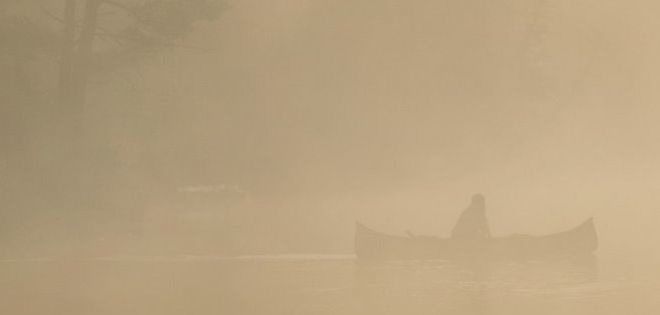
 I was saddened to learn today (from my friend Sylvia, who blogs here and here) of the passing of the Norwegian philosopher Arne Naess. He was a sort of a minor hero of mine. I first discovered the work of Arne Naess as an undergraduate double majoring in biology and history (I eventually dropped the biology major and have wondered ever since if I didn't make a mistake in doing so but I digress....), and wrote an interdisciplinary paper (for an interdisciplinary class) on the history of the environmental group Earth First!, which Naess' ideas had inspired.
Here 's an excerpt from a news story about Naess and his passing:
Arne Naess, Norwegian Philosopher, Dies at 96
By William Grimes
Published: January 14, 2009
Arne Naess, a Norwegian philosopher whose ideas about promoting an intimate and all-embracing relationship between the earth and the human species inspired environmentalists and Green political activists around the world, died Monday. He was 96.
...In the early 1970s, after three decades teaching philosophy at the University of Oslo, Mr. Naess (pronounced Ness), an enthusiastic mountain climber and an admirer of Rachel Carson’s “Silent Spring,” threw himself into environmental work and developed a theory that he called deep ecology. Its central tenet is the belief that all living beings have their own value and therefore, as Mr. Naess once put it, “need protection against the destruction of billions of humans.”
Deep ecology, which called for population reduction, soft technology and non-interference in the natural world, was eagerly taken up by environmentalists impatient with shallow ecology — another of Mr. Naess’s coinages — which did not confront technology and economic growth.
It formed part of a broader personal philosophy that Mr. Naess called ecosophy T, “a philosophy of ecological harmony or equilibrium” that human beings can comprehend by expanding their narrow concept of self to embrace the entire planetary ecosystem. The term fused “ecological” and “philosophy.” The T stood for Tvergastein, his name for the mountain cabin he built in 1937 in southern Norway, where he often wrote.....
The entire article is here.


He leaves quite a legacy.
ReplyDeleteIf only we'd be quicker to listen...
I'm prone to believe that if the planet cannot cope with this amount of people on it, then it wouldn't have been able to produce as many as it has.
ReplyDeleteAnd on the scarcity of food, I say that too is a deception, we have enough food to feed everyone, the food is simply mismanaged on a horrific even conspiratorial scale.
I'm wary of any who wants to 'reduce the population' but it is an interesting point, indeed, I also believe the U.S. and U.K. governments are already working on many ways to kill millions of people this may sound far fetched by I'm confident we will start to see massive reduction in western populations over the next three or four decades.
We live in dangerous but amazing times.
Forest…
ReplyDeleteI know practically nothing about the man, except that I recall seeing him in a brief clip during some nature show a few years back.
His ideas and inspiration have certainly made their way around the globe, though. And his legacy will continue to spary thought and change.
Wilsonian,
ReplyDeleteAgreed.
McGuire
Uhhh...yeah, what you write here sounds quite far fetched. The only point in your comment at which I agree with you is that we live in dangerous times. It sounds like, however that we think they are dangerous for different reasons. I published your comment even though I entirely disagree with your views because you did express your views in a respectful manner. Thank you much for that.
Peace to you.
Grizzled,
Yes, so be it.